Know which route sections need a closer inspection.
Review satellite ground-motion history along railways, pipelines and utility routes. Compare movement with seasonal patterns, vegetation, water and nearby works before planning field checks.
For rail infrastructure managers, pipeline operators, utility asset teams and their engineering partners.
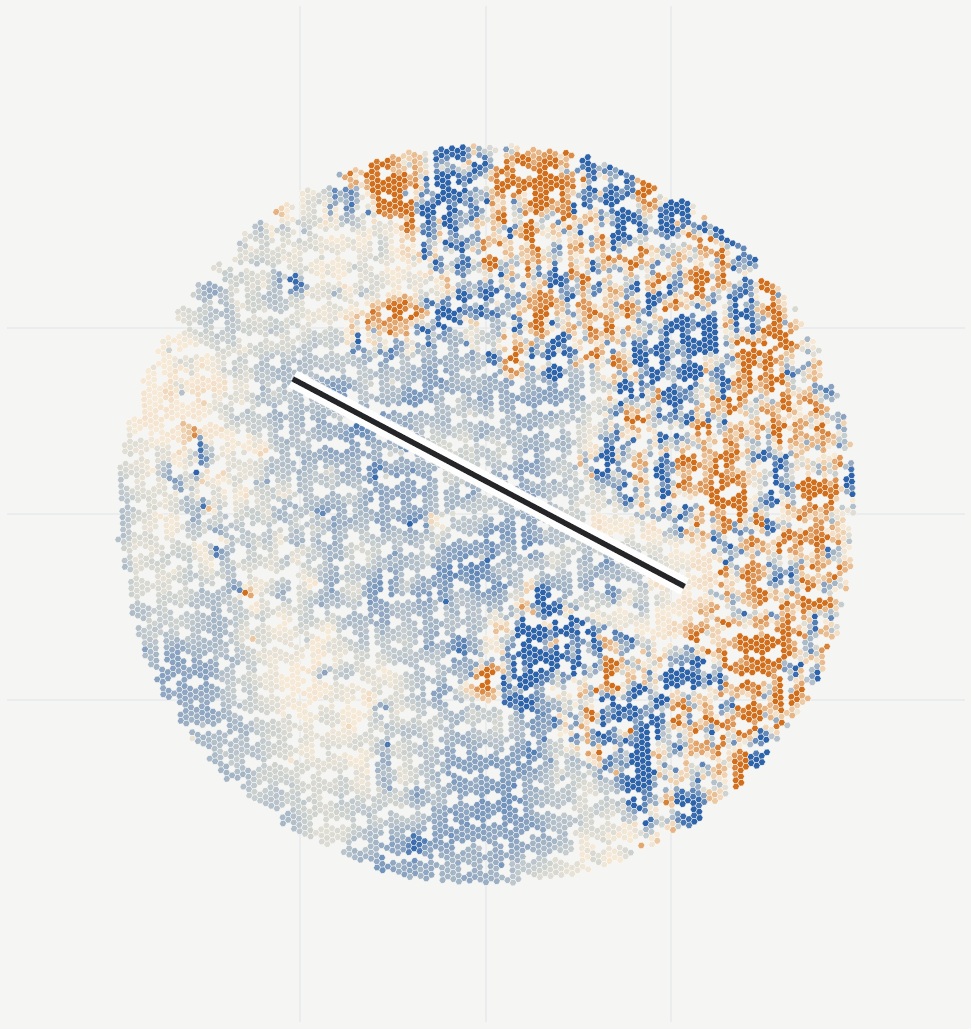
What you receive
Focus ground, drainage and embankment checks on sections showing changing movement.
Ground-motion monitoring for agreed route sections, with a historical baseline, weekly summaries and reviews of new observations.
When it helps
An upcoming inspection programme, recurring drainage problems, nearby earthworks or movement around an embankment, crossing or access road.
- Route-section histories
- Compare movement and changing rates along named sections, crossings and embankments.
- Inspection locations
- Link areas for follow-up to the asset boundaries and maintenance sections you supply.
- Seasonal and site context
- Compare movement with temperature, seasonal patterns, vegetation, water and nearby works.
- Updates and reusable data
- Receive weekly summaries, dashboard views and GIS exports with source dates and measurement quality.
Delivery
Start with the site you need to understand.
We run the analysis and review the observations with your team.
Send the site and relevant dates
A site name, map link or boundary is enough to start. Include any asset boundaries and monitoring records you have.
Agree the outputs and cost
We check radar coverage and agree the history, asset groups, reporting schedule and cost.
Review the results together
Review movement histories and locations for follow-up. Choose a one-off study or continue with regular updates.
Questions this review helps answer
Which route sections need a survey or inspection next, and where would additional instruments be useful?
How should we use the measurements?
Ground-motion measurements support engineering review. They do not measure buried pipe condition, rail defects or structural safety. Coverage and new observation dates are shown for each section.